Best Fencing Builders: Picking the Right Hardware
A fence is among those home tasks people admire from the sidewalk, then forget about until something begins wobbling, squealing, or leaning like it's reassessing its life selections. The fact is, a fence hardly ever fails due to the fact that the boards weren't "rather sufficient." It fails since the hardware did not match the task, the environment, or the means the fence actually gets stressed.
If you've ever before viewed a post gradually develop into a question mark over a number of seasons, you already recognize the punchline. Excellent secure fencing contractors do not just put product onto a structure. They stress over links, fasteners, anchors, rust resistance, and the stuff you can not see once everything is set up. That's where the most effective fence companies earn their maintain, and where choosing the right equipment comes to be the distinction between "wonderful fencing" and "great fencing that still looks great following year."
Below is the practical, real-world method to consider hardware when you're hiring the most effective fencing contractors, comparing best fencing installers, or choosing whether you're collaborating with the most effective fencing builders for your certain yard.
The hardware is the framework, not the decoration
People love to discuss timber varieties, board accounts, and whether an entrance suits. Those issue, yet hardware is what secures the system with each other and maintains it by doing this with wind, rainfall, freeze-thaw cycles, and the periodic impact from a rogue lawnmower.
A fencing is generally a collection of force transfers. Wind presses. Fasteners withstand pull-out and shear. Blog posts lug the lots. Brackets disperse it. Joints and locks take repeated motion. If any type of web link because chain is underspecified, the fencing will at some point "discover the powerlessness." Usually it does this in the least lovely means, like loosening hardware near all-time low initially, where water sits and salt or dirt splash happens.
When you're contrasting Best Fence Contractors or Best Fence Installers, do not allow them win your attention with shiny makings. Ask what hardware they intend to utilize, and why.
Start with the fencing kind, due to the fact that tension changes everything
Different fence designs pack the equipment in different ways. A solid panel fencing can imitate a sail in heavy wind occasions, placing even more stress on the blog posts and fasteners. A spaced picket fencing permits air movement, generally reducing suction pressures, yet it still pulls on rails and creates racking when articles move even slightly.
Then there's the ground condition. Fences on compacted soil act differently than fences on loosened fill, clay, or incline locations where water drainage and freeze lines are unequal. Articles may not move a lot when they're freshly set, yet they will certainly if the base assistance is weak or if hardware encourages rotation.
Even prior to you speak bolts, you need to understand what hardware groups you're actually choosing:
- Fasteners for rails and boards (nails, screws, screws, staples)
- Hardware for joints (brackets, tension equipment, edge dental braces)
- Post anchoring system (concrete, ground screws, post bases, hardware-coated messages)
- Gate equipment (joints, latches, hinges for gate weight, flexible hardware)
- Corrosion protection (galvanization, stainless, coated steel, treated lumber compatibility)
Post setup: the component that chooses whether "hardware option" matters
If your blog posts fail, whatever else is just adding a wonderful structure around an architectural issue. The equipment conversation begins at the post base and continues with just how rails connect to posts.
Concrete and article bases are not interchangeable
A typical error is assuming that if somebody used concrete, the work is automatically strong. Concrete helps, but award-winning fencing experts only if the blog post is established correctly, with proper depth and drainage factors to consider. Some installers count on "sufficient" hole dimensions or bury the post as well shallow, after that compensate with thicker lumber. That may delay failing, but it doesn't take care of the root cause.
Post bases issue due to the fact that they maintain the wood raised and lower direct contact with soil dampness. Hardware that isolates dealt with lumber from specific metals can also assist. If you have actually ever seen bolts rust too soon or timber turn gray-black quickly, you have actually likely fulfilled the chemistry trouble: dealt with wood, incompatible steel, and moisture teaming up like a sitcom duo.
If you're on deck grounds or unique structures, equipment changes
Fences mounted on existing structures, like stonework walls, preserving walls, or deck surfaces, call for anchors and braces crafted for that atmosphere. Those connections experience different kinds of tension than ground-set posts.
If you're managing stonework, ask about support type and spacing. If you're dealing with a deck or concrete patio area side, ask whether they're utilizing appropriate base plates and load-rated add-ons. Equipment ought to be selected for the path of pressure, not simply for "what remains in the truck."
Fasteners: screws, nails, and why the "best" depends upon what you're attaching
When property owners ask about hardware, the responses often get simplified right into a fight: screws versus nails. The real world is messier.
Screws often tend to hold far better in lots of fence constructs because they hold and stand up to pull-out, especially when connecting rails to articles or boards to rails. They likewise permit fine positioning during setup. The trade-off is that screw installation can be slower, and it's simple for installers to use the wrong screw type or size, or to overdrive screws right into wood.
Nails can function extremely well when the right nail is made use of, the application matches, and the crew corresponds. Nails are faster, but pull-out resistance differs. In certain problems, you can see early looseness at joints if nail selection and placement aren't right.
What matters most is not just "screw versus nail." It's:
- Fastener material and coating
- Diameter and size for the specific joint
- Spacing and edge distance
- Whether the fastener is intended for cured lumber contact
- Whether the bolt is rated for exterior direct exposure and deterioration resistance
Corrosion resistance: do not treat it like a suggestion
For fences, rust is inescapable. The concern is whether it takes place swiftly sufficient to wreck your fencing prior to you're ready to change it. Equipment marketed as exterior-rated is a begin, but you need to recognize what kind.
Hot-dipped galvanized, stainless, or effectively coated outside bolts typically execute best in damp areas. In coastal or hefty salt direct exposure areas, the "wonderful galvanized" a home builder utilized last time might develop into an "unfavorable science experiment" in a period or two.
If the installer claims, "It's all galvanized, it's fine," ask one follow-up: what type of galvanized and what bolt material is it? If you can not obtain a clear response, you may wish to deal with that as a caution sign.
Rails and brackets: the silent heroes of stiffness
Rails are where fencings get stealthy. Even small blog post movement transfers right into racking loads, and those lots are combated at the rail-to-post links. Equipment style right here affects just how the fence resists wobble and how long it remains tight.
A well-built fencing has links that do 2 things simultaneously: they hold securely, and they enable the framework to behave predictably under wind without loosening up. Numerous fencing failings turn up as rails drifting away from blog posts, or screws slowly backing out. That can take place if the bracket is incorrect, the rail period is too long for the connection strength, or if the fasteners weren't positioned to withstand the instructions of the forces.
Brackets, corner equipment, and braces are the distinction between a fencing that bends with dignity and one that develops into a loosened collection of parts. Edge blog posts in particular take misuse. They take care of side lots from two fencing instructions, plus soil movement and gravity. If a contractor makes use award winning fence company of lightweight connections at edges, it will certainly usually turn up as the edge "opening" over time.
Hardware for gates: where style fulfills leverage
Gates are one of the most human part of a fencing. Individuals open them, shut them, lean on them, and in some cases neglect they exist when supporting with a vehicle. Hardware failings often come to be noticeable initially at hinges and locks since entrances move constantly.
Gate hinges should match the gate size, weight, and whether eviction is under stress or supported with correct framing. A tiny joint could be technically "ranked" for a generic weight, yet if the gate framework is thicker, the timber is much heavier, or the fencing line forces a tilted swing, those scores may not hold in practice.
Latches are likewise worth interest. A latch that does not involve cleanly can create "chatter," loosening fasteners. Gravity and duplicated cycling can antagonize you also when the fencing looks fine.
If your gate gets on a slope, equipment needs to accommodate alignment adjustments. A gateway that scrubs will at some point use down the get in touch with factors, and those wear patterns bring about misalignment and more anxiety on joints. This is the component where good installers protect against issues rather than responding after something binds.
Picking "dealt with wood compatible" hardware: the chemistry quiz no one asked for
Treated lumber is engineered to withstand rot, and it does so utilizing chemicals that can communicate with certain metals. That indicates your fasteners and ports need to be suitable for treated wood.
Most reputable fence contractors recognize this, yet not every building contractor makes it a selling factor. It should be typical method. If you get inconsistent answers, it's reasonable to ask:
- Are the bolts made for cured lumber?
- Are the braces and ports ranked for outside usage and wetness exposure?
- Are they utilizing stainless or compatible covered metal where required?
This isn't fear. It's basic compatibility. When the wrong steel fulfills treated wood plus wetness, you can obtain faster deterioration than you expect, often right where you the very least desire it: at joint connections that are hard to gain access to once the fencing is finished.
Weather and area: your hardware ought to fit the environment you in fact live in
Hardware choice isn't only about the fencing design, it has to do with the environment it endures. If you live where winters bring repeated freeze-thaw, the dirt moves, article bases shift slightly, and hardware needs to tolerate motion without loosening or snapping.
In damp climates, corrosion accelerates at joints that hold water, like overlaps at rail ends and sheltered edges. If your fence includes gateways or straight surface areas that gather drainage, corrosion resistance comes to be much more important.
In windy locations, racking lots enhance. That pushes you towards stronger links, stiffer rail systems, and thoughtful spacing. Equipment must be able to preserve stability under cyclic anxiety, not just make it through a single gust.
If you're hiring the best fencing contractors in a high wind or seaside area, you're really hiring their ability to match equipment to the tension account where you live. The "finest" installer isn't the one who quotes the most affordable number, it's the one that has actually seen your weather before.
Questions to ask your contractor before you commit
If you wish to contrast Best Fencing Companies or Best Fence Installers without transforming the conversation into a full-time design workshop, ask inquiries that compel specifics. The most effective specialists will welcome it, due to the fact that they've got clear solutions and they know you're securing your investment.
Here are 5 inquiries that dependably different detail-focused teams from guessers:
- What precise fasteners and coverings are you utilizing for rails and boards, and are they ranked for exterior and treated lumber contact?
- How deep will certainly you establish posts, and what post base or anchoring method will certainly you make use of for my dirt and water drainage conditions?
- For corner and end blog posts, what supporting or reinforcement equipment do you install, and how is it fastened?
- What joints and lock types do you make use of for gates, and are they chosen based on gate dimension and weight?
- How do you deal with fence alignment and hardware modification after installment on inclines or irregular ground?
You'll see the questions are not regarding whether they "do quality job." They're about the link factors where top quality either exists or doesn't.
The setup details that make hardware last
Even excellent equipment can fail if installment is careless. The link top quality depends upon just how the equipment is set up, not simply what the hardware is labeled.
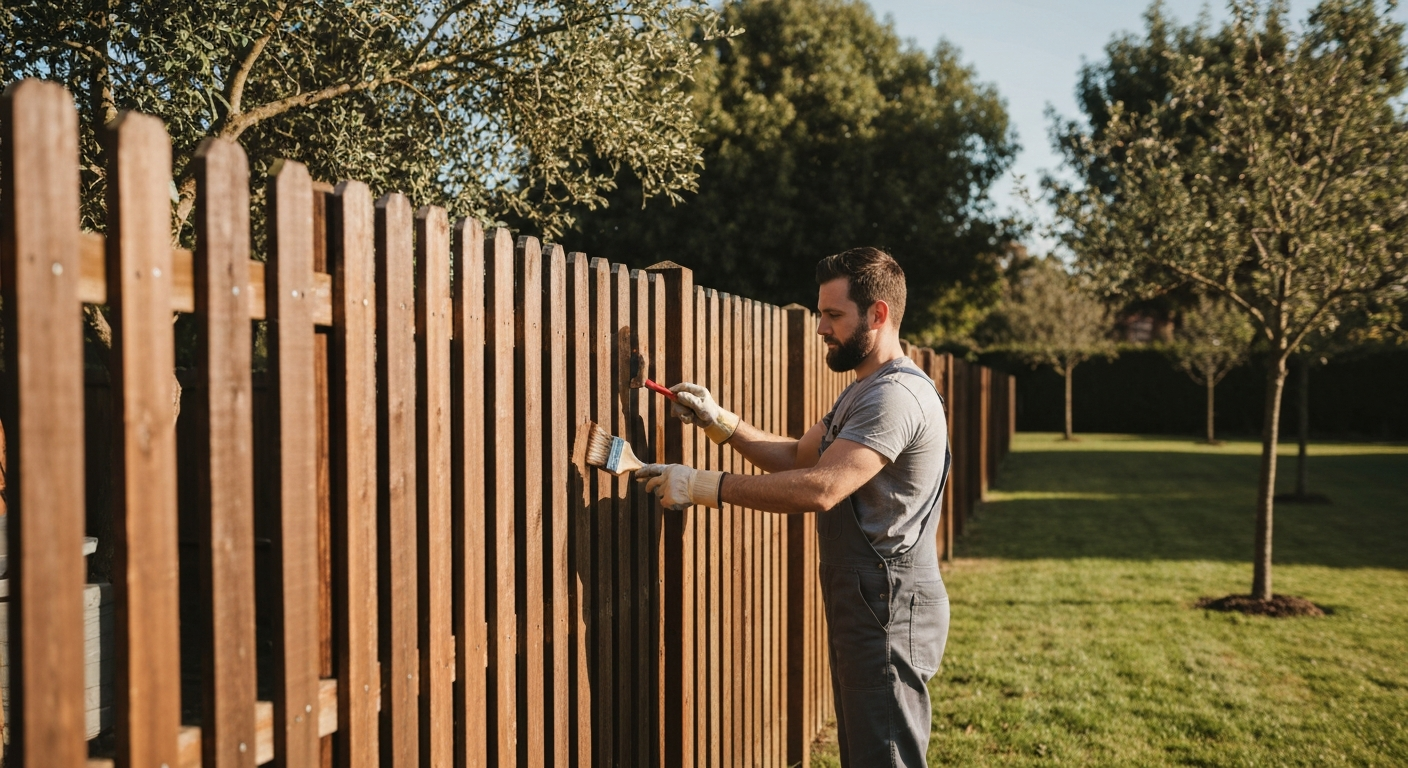
Good installers drive or secure with regular method. They prevent breaking wood, regard edge ranges, and utilize right pre-drilling when needed. They likewise stay clear of over-tightening screws that can remove wood fibers or flaw the connection surfaces.
Spacing issues. If fasteners are placed too far apart, the joint bends even more and the equipment loosens faster. If they are as well close to a side, you risk splitting that turns a limited joint into a loose one.
Alignment matters as well. A rail that sits slightly skewed can require equipment into a bind. That bind enhances stress and anxieties at screw heads and can loosen links in time. It also brings about jagged boards, which after that causes property owners observing the fencing "looks off," also if the framework is holding.
Trade-offs: when "much better" hardware prices extra for a reason
Sometimes the best alternative is not one of the most costly one. A great fence contractor equilibriums hardware expense with anticipated life expectancy and local risk.
For example, stainless bolts can be outstanding for corrosion resistance, yet they could be excessive for each component in inland regions with moderate moisture. On the other hand, galvanized hardware could be great in dry environments however not in seaside locations with heavy salt exposure.
There's likewise a functional trade-off between hardware rigidity and adaptability. A fencing that is also inflexible can send shocks to posts and joints in such a way that urges splitting or pull-out. A fence that is as well adaptable can rack and loosen fasteners.
That's where seasoned installers earn their reputation. They don't simply select the "greatest" metal. They select the hardware that keeps connection honesty while enabling the fence to endure regular movement.
A reasonable contrast: what you'll see in bids
When contrasting quotes from Best Fence Companies, Best Fence Contractors, and Best Fence Installers, you might see similar overalls however different hardware line products concealed in the details of the proposal.
Sometimes a lower quote utilizes lighter adapters, much shorter post sizes, fewer bolts per rail, or equipment that is "outside" but not corrosion-optimized for your environment. Other times the lower quote is just ineffective labor, and the equipment top quality might still be solid. That's why you must ask for uniqueness and, when possible, for the brands or type of hardware.
If the service provider can't give equipment information, you can still evaluate their process. Do they talk about supporting edges? Do they discuss article base selections? Do they review compatibility for cured wood? Do they explain just how they protect against water trapping at joints? Those are the telltales that the equipment plan is greater than a guess.
Two hardware scenarios I've seen fail (and how to prevent them)
I'll keep this based, because the patterns repeat.
First circumstance: galvanized bolts that look penalty throughout setup, then loosen up within a period or two on a fencing line that gets heavy rainfall and sprinkler overspray. The builder utilized exterior-rated hardware, but not the ideal coating for the dampness direct exposure at those junctions. The fence really did not collapse, but it gradually shed tightness. Bed rails started to move, and the homeowner spent the next year tightening up and watching the issue return. The solution had not been cosmetic. It was swapping to hardware with greater deterioration resistance and re-torquing joints with proper technique.
Second circumstance: corner posts without appropriate reinforcement. The fencing itself looked straight initially, however wind tons pressed versus the line, and the edge articles experienced higher side tension. Hardware for those joints was either also light or not placed to withstand racking. Within a couple seasons, you 'd see the corner space expand slightly and eviction stop locking efficiently. The aesthetic concern was apparent, yet the architectural reason was clear: the connections at the corner were not designed for edge stress.
Both circumstances are why hardware option need to be talked about with uniqueness, not with confidence theater.
What "Best Fencing Builders" typically do differently
The best fencing builders deal with equipment like a system, not a wish list. They consider just how pressures relocate with blog posts, rails, and entrances. They take into consideration dirt conditions, drainage, regional rust danger, and the way the fence line acts in wind.
They additionally construct for maintainability. If an entrance pivots ultimately need change, the hardware layout should permit solution without dismantling half the fence. A well-thought-out hardware strategy keeps the fencing working long after the installer has actually left and the invoice is just a memory.
You'll identify this state of mind when they can explain their options clearly. They don't simply claim what they will install. They clarify why it will certainly hold up in your yard.
Final thought: pick the equipment that matches your anxiety, not simply your style
Choosing equipment can feel unusually technical when you're standing in a backyard with a gauging tape and a desire. Still, it's one of the most practical method to prevent fence regrets.
If you're shopping around for the Best Fencing Companies or evaluating whether a specific crew is among the very best Fence Contractors or Best Fence Installers, bring your emphasis back to connection points. Ask about blog post bases and anchoring, bolt products and rust resistance, corner reinforcement, and gate equipment selection.
A fencing ought to resemble it belongs in your lawn from day one, however it ought to likewise behave like it belongs there years later. Hardware is just how you make that happen.
Ends · FENCINGINSTALLERSTFM107